

Dry Needling Physical Therapy
How does Dry Needling aid Physical Therapy?
What is dry needling?
Dry needling is a pain-relieving technique using a tiny acupuncture needle. The needle is inserted at points of the body that are constantly tight, creating pain relief that many patients never thought possible. The needles can treat deep parts of the muscles- areas that are often difficult to reach with massage. They cause a “twitch” response – a brief contraction followed by sustained relaxation. This response can “deactivate” painful, knotted areas in the muscles.
Benefits of Dry Needling Therapy
Dry needling therapy, at times, is included in a complete treatment plan aimed at relieving pain and promoting mobility. It is a technique that aims at trigger points in the muscles and relaxes the muscles as well as increases the movement. Studies demonstrate that the method of dry needling can not only be a pain killer but also facilitate the communication between nerves and muscles, thus decreasing the time for recovery.
Moreover, physical therapists are trained in-depth about anatomy and modalities of treatment including some extra specialization for performing dry needling therapy. When you decide to get dry needling, always ask about your therapist’s qualifications and experience.
What can dry needling treat?
The dry needling technique can help relieve pain in most muscles, including jaw pain, shoulder pain, hamstring tension, and golfer’s elbow. It can improve blood flow, speed healing time, and help rid muscles of deep knots that other techniques cannot reach. Dry needling leads to many of the same results as massage, but at a deeper level. For a patient that has experienced results with massage, but found them to be short-lived, dry needling may be a good option. It can also complement massage therapy.
Who Shouldn’t Get Dry Needling Therapy?
Not every patient can benefit from dry needling therapy. The method is inappropriate for children under the age of 12 because of the possible pain factor involved. In case of a child considering it, you must always talk to a medical professional first and start with other non-invasive approaches. Furthermore, some patients need to discuss with their doctors before undergoing dry needling therapy like people who are:
- Pregnant
- Not able to comprehend the treatment properly
- Scared of needles (trypanophobia)
- Have weak immunity
- Had tracheostomy recently
- Are on anticoagulants
How does dry needling work?
Dry needling is not acupuncture – it is based strictly on Western medical principles and research. However, it is sometimes used within the context of an acupuncture practice. According to research by Dr. Jay Shah at the National Institutes of Health, inserting a needle into trigger points can lead to biochemical changes that reduce pain. The biochemical changes can help lead to the essential twitch response, which is the first step in breaking the cycle of pain.
Will the procedure hurt?
Because the needle is so small, it does not hurt the way a larger hollow needle does when puncturing the skin. Most patients describe the sensations as “releasing” or “pressure.” The needle remains in the skin for a very short amount of time – just enough to relax the muscle. There may be a small amount of pain, which some patients describe as a slight shock or a cramping sensation, but it is well worth the lasting relief that dry needling causes.
How will I feel after the session?
The muscles treated will likely feel sore, the way they do after challenging exercise. This is because the needle has caused them to contract numerous times in quick succession in order to relax them. Patients may feel fatigued, but not so much that it interferes with everyday activities. Some patients find it helpful to treat the area with heat or ice if there is soreness. After just a couple of sessions, most feel lasting relief from pain.
How often will I need to return to maintain my progress?
Usually, a dry needling treatment is repeated every five or six days until the pain cycle is broken. The first cycle will focus on just a few key muscles. Then, as the body becomes more used to the sensations, the treatment is fine-tuned to be as effective as possible. The technique is not a quick fix; instead it is a process that will help break the pain cycle. Once the pain cycle is broken, other treatment options are introduced to help prevent future problems.
Have Questions?
Let us know if you have any questions about your treatment, our practice and whatever else is on your mind. We are here to help and we look forward to serving you!
Manage Chronic Pain
Shoulder Pain Physical Therapy in Fort Lee, NJ
Restore Strength & Full Range of Motion
Suffering from shoulder pain or stiffness? Get fast relief with expert physical therapy in Fort Lee, NJ. Our therapists are here to help you recover quickly and safely.
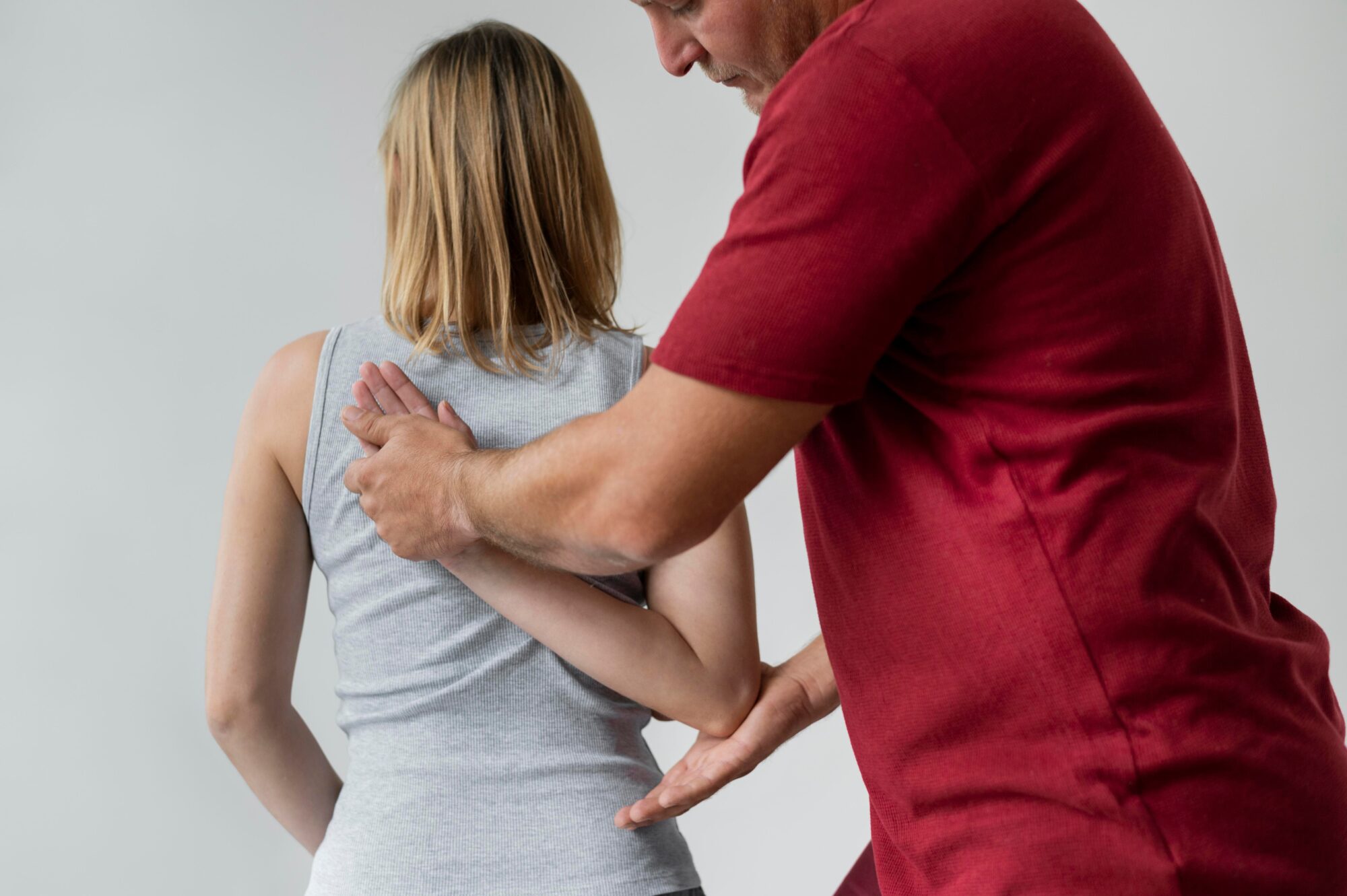
Understanding Shoulder Pain
Our expert therapists identify the root cause of your shoulder pain, not just the symptoms. We’ll pinpoint the exact issue to create a targeted recovery plan that works for you. We determine the cause of your discomfort rather than its symptoms. Our therapist performs thorough exams and analyzes your movement patterns.
Conditions affecting the shoulders are impacted by the neck and upper back and can put strain on the joint. We identify the underlying reason and develop customized treatment programs with our focused shoulder pain treatment NJ in order to regain mobility and long-term function. Schedule a thorough examination today to start healing.
What Are the Common Causes of Shoulder Pain?
Shoulder pain can be caused by common conditions like bad posture, repetitive strain, or rotator cuff tears. The sooner you seek treatment, the faster you’ll recover. These can cause shoulder pain with sharp shooting pain. This shoulder pain can also spread to the arm and limit your strength.
Professional care makes a difference! If you are coping with a slight strain, tendon irritation, or issues like rotator cuff tears. Our focused shoulder pain NJ programs are made to help you safely get back to your level of activity and regain your mobility. Contact us now to identify the cause of your pain and get started on your recovery plan!
How to Treat Shoulder Pain with Physical Therapy?
Our evidence-based treatments target the cause of your shoulder pain, restore mobility, and improve strength, so you can return to normal activities pain-free. Strengthen supportive structures and address underlying dysfunctions. Every treatment plan is aligned to your illness and your level of activity. It guarantees a secure and efficient recovery.
These could consist of:
- Therapeutic Exercise
- Functional Training
- Patient Education
- Joint Mobilization and Manipulation
- Soft Tissue Mobilization
- Dry Needling
- Trigger Point Therapy
Start your personalized treatment today. Book an appointment with our expert therapists.
We BELIEVE In...

Personalized Rehabilitation Plan
Our therapy program is customized to your degree of discomfort, mobility restrictions, and functional goals.
Movement Correction and Postural Education
We guide on how to move, lift, and carry out everyday tasks without straining your shoulders.
Patient-Centered Care
Our therapists offer guidance throughout each session and modify treatments as you progress.
Ongoing Progress Tracking
We continuously monitor your strength and functional performance to ensure your therapy stays effective and results-driven.
Other Conditions We Treat
Ankle and Foot Pain
We treat instability and tendon injuries that limit your mobility and offer therapy to restore balance and pain-free movement.
Knee Pain Treatment
Our knee pain therapy focuses on improving flexibility and functional knee strength.
Hand/Elbow/Wrist
Our therapist finds the source of pain and applies focused treatment to enhance grip strength and flexibility.
Hip Pain Treatment
Our programs target joint tightness and muscle imbalances to improve muscle dysfunction and hip mobility. ent.
Frequently Asked Questions About Physical Therapy for Shoulder Pain
A treatment approach using exercises, manual therapy, and education to reduce pain and restore shoulder function.
Some exercises may feel challenging, but therapy is designed to be safe and minimize discomfort.
Results vary, but most patients notice improvement within a few weeks with consistent therapy.
Yes. Exercises are adapted to your condition and gradually increase as your shoulder strengthens.
Licensed physical therapists with training in musculoskeletal and shoulder rehabilitation.
Yes. It helps relieve pain, restore mobility, and prevent future injuries when done correctly.
Costs vary by clinic and treatment plan; many offer packages or insurance coverage options.
Physical therapy is often the first-line approach and can prevent or delay the need for surgery.
Yes. Therapists tailor programs to accommodate other medical conditions safely.