

Dry Needling Physical Therapy
How does Dry Needling aid Physical Therapy?
What is dry needling?
Dry needling is a pain-relieving technique using a tiny acupuncture needle. The needle is inserted at points of the body that are constantly tight, creating pain relief that many patients never thought possible. The needles can treat deep parts of the muscles- areas that are often difficult to reach with massage. They cause a “twitch” response – a brief contraction followed by sustained relaxation. This response can “deactivate” painful, knotted areas in the muscles.
Benefits of Dry Needling Therapy
Dry needling therapy, at times, is included in a complete treatment plan aimed at relieving pain and promoting mobility. It is a technique that aims at trigger points in the muscles and relaxes the muscles as well as increases the movement. Studies demonstrate that the method of dry needling can not only be a pain killer but also facilitate the communication between nerves and muscles, thus decreasing the time for recovery.
Moreover, physical therapists are trained in-depth about anatomy and modalities of treatment including some extra specialization for performing dry needling therapy. When you decide to get dry needling, always ask about your therapist’s qualifications and experience.
What can dry needling treat?
The dry needling technique can help relieve pain in most muscles, including jaw pain, shoulder pain, hamstring tension, and golfer’s elbow. It can improve blood flow, speed healing time, and help rid muscles of deep knots that other techniques cannot reach. Dry needling leads to many of the same results as massage, but at a deeper level. For a patient that has experienced results with massage, but found them to be short-lived, dry needling may be a good option. It can also complement massage therapy.
Who Shouldn’t Get Dry Needling Therapy?
Not every patient can benefit from dry needling therapy. The method is inappropriate for children under the age of 12 because of the possible pain factor involved. In case of a child considering it, you must always talk to a medical professional first and start with other non-invasive approaches. Furthermore, some patients need to discuss with their doctors before undergoing dry needling therapy like people who are:
- Pregnant
- Not able to comprehend the treatment properly
- Scared of needles (trypanophobia)
- Have weak immunity
- Had tracheostomy recently
- Are on anticoagulants
How does dry needling work?
Dry needling is not acupuncture – it is based strictly on Western medical principles and research. However, it is sometimes used within the context of an acupuncture practice. According to research by Dr. Jay Shah at the National Institutes of Health, inserting a needle into trigger points can lead to biochemical changes that reduce pain. The biochemical changes can help lead to the essential twitch response, which is the first step in breaking the cycle of pain.
Will the procedure hurt?
Because the needle is so small, it does not hurt the way a larger hollow needle does when puncturing the skin. Most patients describe the sensations as “releasing” or “pressure.” The needle remains in the skin for a very short amount of time – just enough to relax the muscle. There may be a small amount of pain, which some patients describe as a slight shock or a cramping sensation, but it is well worth the lasting relief that dry needling causes.
How will I feel after the session?
The muscles treated will likely feel sore, the way they do after challenging exercise. This is because the needle has caused them to contract numerous times in quick succession in order to relax them. Patients may feel fatigued, but not so much that it interferes with everyday activities. Some patients find it helpful to treat the area with heat or ice if there is soreness. After just a couple of sessions, most feel lasting relief from pain.
How often will I need to return to maintain my progress?
Usually, a dry needling treatment is repeated every five or six days until the pain cycle is broken. The first cycle will focus on just a few key muscles. Then, as the body becomes more used to the sensations, the treatment is fine-tuned to be as effective as possible. The technique is not a quick fix; instead it is a process that will help break the pain cycle. Once the pain cycle is broken, other treatment options are introduced to help prevent future problems.
Have Questions?
Let us know if you have any questions about your treatment, our practice and whatever else is on your mind. We are here to help and we look forward to serving you!
Shoulder Pain Treatment
Shoulder Pain Treatment with Physical Therapy
Relieve Pain & Restore Full Shoulder Function
Shoulder pain from reaching, lifting, or sleeping on your side? Our Fort Lee physical therapists diagnose the exact cause and restore full shoulder function without surgery.
4.9 · 120+ Google Reviews
Trusted across Fort Lee
No Referral Needed
Direct access — book today
1-on-1 With a Doctor of PT
Full sessions, never double-booked
Most Insurance Accepted
We verify your benefits free
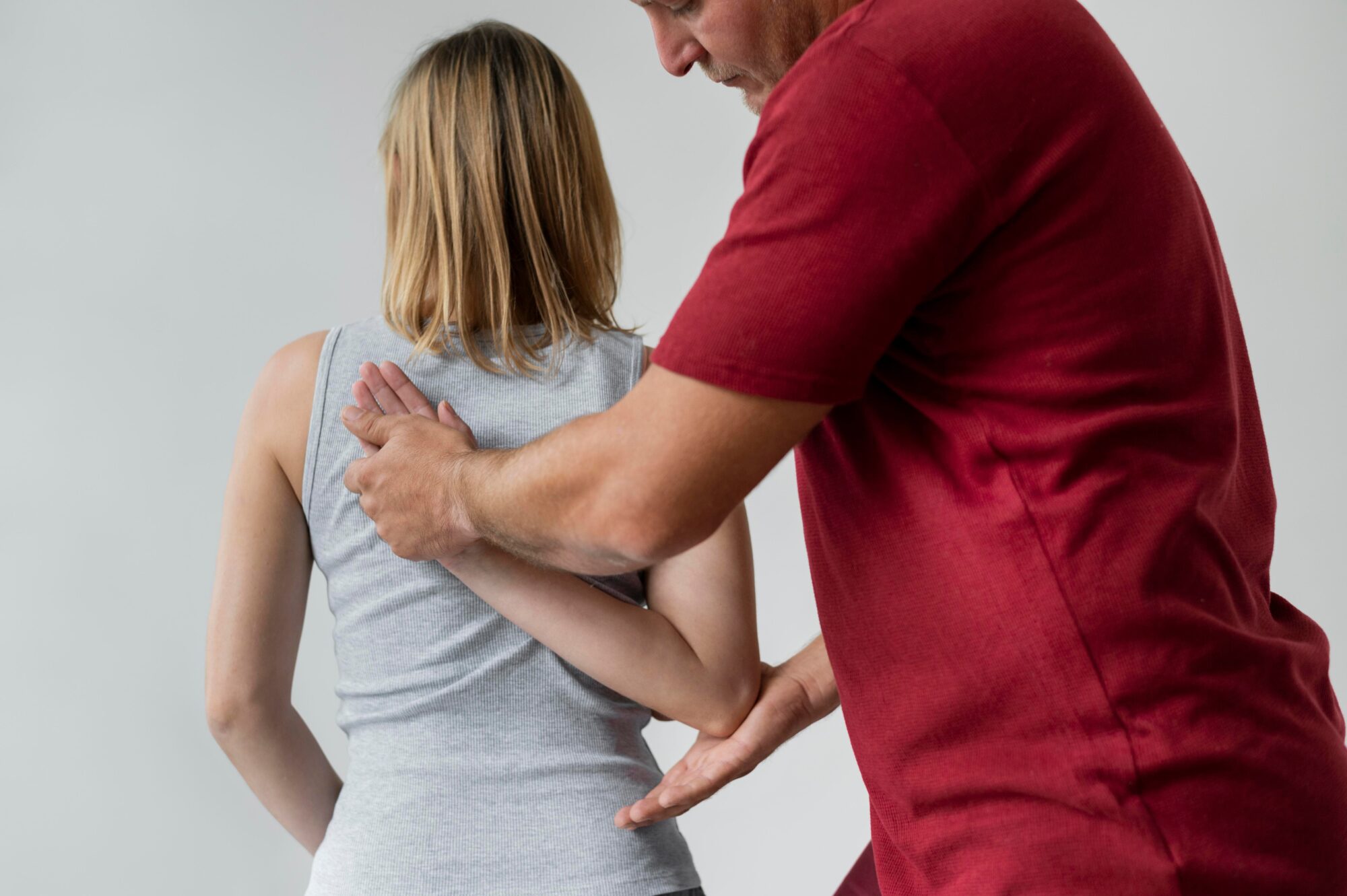
Expert Shoulder Pain Treatment in Bergen County, NJ
The shoulder is the most mobile joint in the human body, and that mobility comes at the cost of inherent stability. As a result, the shoulder is among the most injured joints, with conditions ranging from rotator cuff problems and frozen shoulder to AC joint injuries and shoulder instability.
Shoulder pain that interrupts sleep and limits arm use needs specialist attention, not just rest and anti-inflammatories. Fort Lee Physical Therapy provides expert shoulder rehabilitation for all conditions and all stages of life.
Our Shoulder Pain Clinic in NJ provides a comprehensive evaluation of all four shoulder joints and the surrounding soft tissues.
What Is Shoulder Pain?
The shoulder complex involves four joints (glenohumeral, acromioclavicular, sternoclavicular, and scapulothoracic) working in coordination.
The glenohumeral joint (the ball-and-socket joint) is stabilized primarily by the rotator cuff muscles and the shoulder labrum.
When any component of this complex system is disrupted, pain, weakness, and limited motion result.
Common Symptoms
- Pain with reaching overhead or behind the back
- Shoulder pain at night, especially when lying on the affected side
- Weakness when lifting the arm or carrying objects
- A catching, clicking, or popping sensation
- Stiffness that limits dressing and grooming
- Pain that radiates down the arm (may suggest rotator cuff or nerve involvement)
Rotator cuff pathology, including tears, tendinopathy, and impingement, accounts for up to 70% of all shoulder pain presentations Physical therapy produces excellent outcomes for all severity levels of rotator cuff problems.
How We Treat Shoulder Pain
We conduct a comprehensive shoulder assessment that evaluates all four joints, rotator cuff strength, scapular mechanics, and thoracic spine mobility. This whole-shoulder approach ensures that contributing factors at the neck, thoracic spine, and scapula are addressed alongside local shoulder treatment.

Rotator Cuff Strengthening
Progressive strengthening of the rotator cuff and scapular stabilizers that restore shoulder joint stability and function.
Shoulder Range of Motion
Targeted mobilization and stretching to restore full shoulder elevation, external rotation, and behind-back reach.
Manual Therapy
Joint mobilization, soft tissue techniques, and mobilization-with-movement that reduce pain and improve mobility.
Scapular Retraining
Correcting scapular position and movement mechanics — a critical and often overlooked component of shoulder rehabilitation.
Our Shoulder Pain Clinic in NJ serves conditions from rotator cuff tendinopathy and frozen shoulder to labral tears and AC joint injuries, with condition-specific protocols rather than generic shoulder programs. Patients from Englewood Cliffs, Cresskill, and Fort Lee receive a diagnosis-first approach.
Reaching Without Pain Again
At our Shoulder Pain Clinic in NJ, most shoulder conditions respond well to 6–10 weeks of targeted physical therapy. We provide an independent home exercise program to extend and maintain your rehabilitation gains.
Serving Bergen County & Beyond: Our shoulder specialists serve the entire Fort Lee and Bergen County area, including Englewood Cliffs, Cresskill, Demarest, and Tenafly. We also see patients from Washington Heights, NY looking for expert shoulder care close by.
Fort Lee Physical Therapy is the shoulder rehabilitation clinic Bergen County residents recommend to friends and family. Our shoulder pain treatment restores pain-free overhead function and restful sleep. For more questions, please call (201) 585-7300 today.
Other Services Provided by Fort Lee PT
Physical therapy aims to reduce pain, improve movement, and restore function. It uses a combination of treatment methods to support healing and recovery. Physical therapy is often recommended for injuries or medical conditions that limit mobility and make daily activities more difficult.
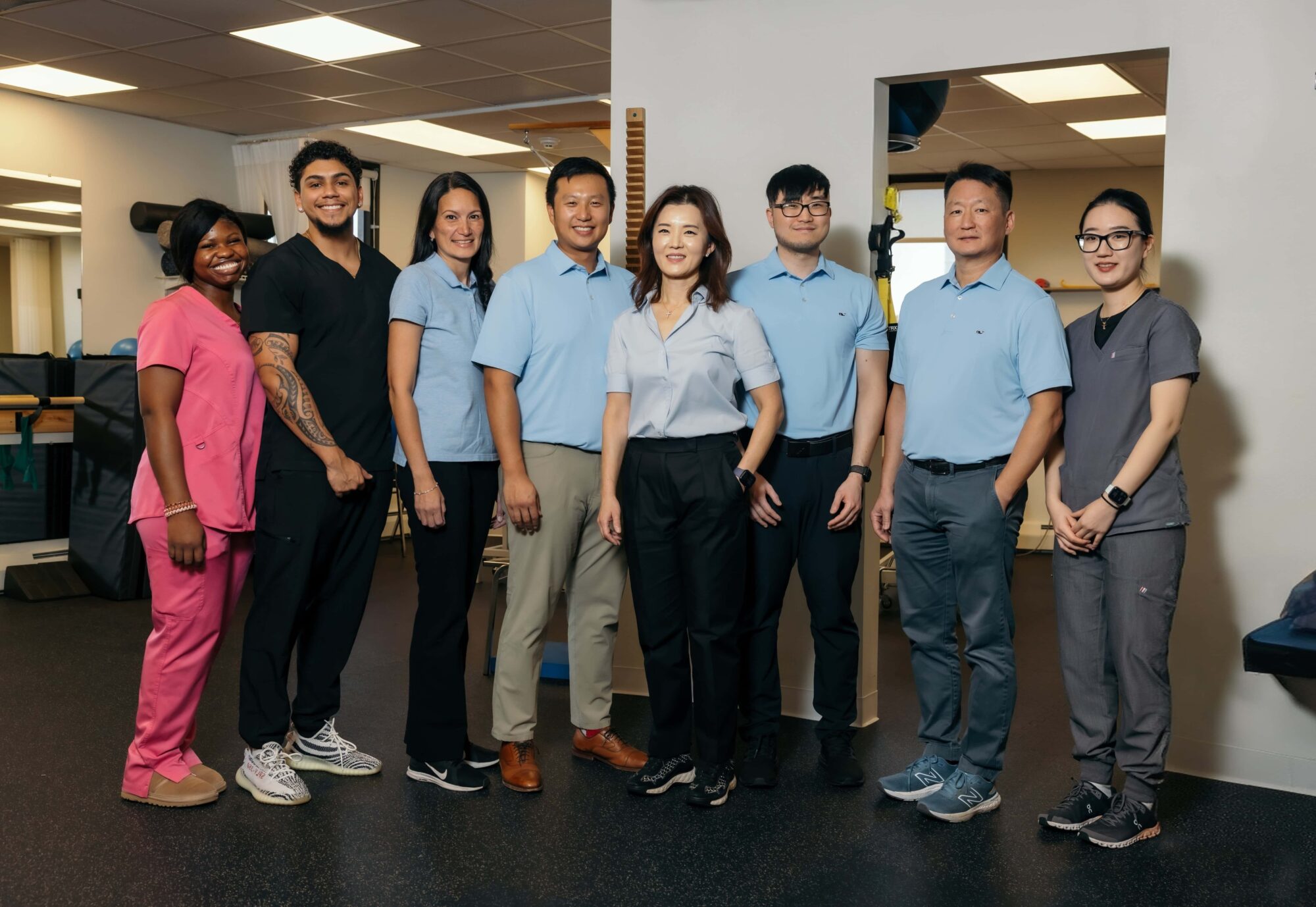
Meet our team
Doctorate-level therapists who build a plan around your specific injury and goals.
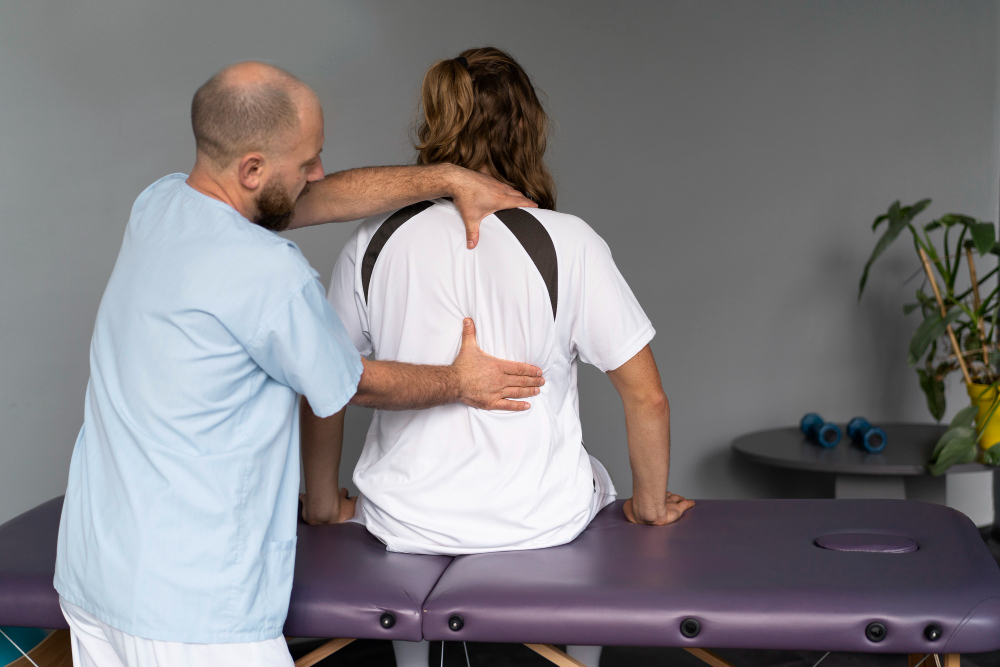
Conditions we treat
Back, knee, shoulder, hip and more. Find the condition that matches your pain.
Where does it hurt?
The PAIN We Treat
Frequently Asked Questions About Shoulder Pain Treatment
Rotator cuff tears cause weakness (especially with arm elevation and external rotation), night pain, and sometimes an audible click. Diagnosis is confirmed with MRI or ultrasound. Importantly, many rotator cuff tears — even large ones — respond successfully to PT without surgery.
Yes — physical therapy is the primary treatment for frozen shoulder. It combines pain management, joint mobilization, and progressive stretching to restore range of motion over the typical 12–24 month natural history of the condition.
Night shoulder pain is common in rotator cuff conditions and frozen shoulder. Lying on the affected shoulder increases subacromial compression, while lying on the opposite side can stretch the affected side. Position modification strategies can significantly improve sleep.
Yes — the majority of shoulder conditions, including significant rotator cuff tears, respond to a well-designed PT program without surgery. Research shows that even full-thickness rotator cuff tears have excellent conservative management outcomes.
This varies by condition: mild rotator cuff tendinopathy may resolve in 4–6 weeks, while frozen shoulder may require 3–6 months of PT. Rotator cuff repairs take 4–6 months of post-operative rehabilitation.