

Dry Needling Physical Therapy
How does Dry Needling aid Physical Therapy?
What is dry needling?
Dry needling is a pain-relieving technique using a tiny acupuncture needle. The needle is inserted at points of the body that are constantly tight, creating pain relief that many patients never thought possible. The needles can treat deep parts of the muscles- areas that are often difficult to reach with massage. They cause a “twitch” response – a brief contraction followed by sustained relaxation. This response can “deactivate” painful, knotted areas in the muscles.
Benefits of Dry Needling Therapy
Dry needling therapy, at times, is included in a complete treatment plan aimed at relieving pain and promoting mobility. It is a technique that aims at trigger points in the muscles and relaxes the muscles as well as increases the movement. Studies demonstrate that the method of dry needling can not only be a pain killer but also facilitate the communication between nerves and muscles, thus decreasing the time for recovery.
Moreover, physical therapists are trained in-depth about anatomy and modalities of treatment including some extra specialization for performing dry needling therapy. When you decide to get dry needling, always ask about your therapist’s qualifications and experience.
What can dry needling treat?
The dry needling technique can help relieve pain in most muscles, including jaw pain, shoulder pain, hamstring tension, and golfer’s elbow. It can improve blood flow, speed healing time, and help rid muscles of deep knots that other techniques cannot reach. Dry needling leads to many of the same results as massage, but at a deeper level. For a patient that has experienced results with massage, but found them to be short-lived, dry needling may be a good option. It can also complement massage therapy.
Who Shouldn’t Get Dry Needling Therapy?
Not every patient can benefit from dry needling therapy. The method is inappropriate for children under the age of 12 because of the possible pain factor involved. In case of a child considering it, you must always talk to a medical professional first and start with other non-invasive approaches. Furthermore, some patients need to discuss with their doctors before undergoing dry needling therapy like people who are:
- Pregnant
- Not able to comprehend the treatment properly
- Scared of needles (trypanophobia)
- Have weak immunity
- Had tracheostomy recently
- Are on anticoagulants
How does dry needling work?
Dry needling is not acupuncture – it is based strictly on Western medical principles and research. However, it is sometimes used within the context of an acupuncture practice. According to research by Dr. Jay Shah at the National Institutes of Health, inserting a needle into trigger points can lead to biochemical changes that reduce pain. The biochemical changes can help lead to the essential twitch response, which is the first step in breaking the cycle of pain.
Will the procedure hurt?
Because the needle is so small, it does not hurt the way a larger hollow needle does when puncturing the skin. Most patients describe the sensations as “releasing” or “pressure.” The needle remains in the skin for a very short amount of time – just enough to relax the muscle. There may be a small amount of pain, which some patients describe as a slight shock or a cramping sensation, but it is well worth the lasting relief that dry needling causes.
How will I feel after the session?
The muscles treated will likely feel sore, the way they do after challenging exercise. This is because the needle has caused them to contract numerous times in quick succession in order to relax them. Patients may feel fatigued, but not so much that it interferes with everyday activities. Some patients find it helpful to treat the area with heat or ice if there is soreness. After just a couple of sessions, most feel lasting relief from pain.
How often will I need to return to maintain my progress?
Usually, a dry needling treatment is repeated every five or six days until the pain cycle is broken. The first cycle will focus on just a few key muscles. Then, as the body becomes more used to the sensations, the treatment is fine-tuned to be as effective as possible. The technique is not a quick fix; instead it is a process that will help break the pain cycle. Once the pain cycle is broken, other treatment options are introduced to help prevent future problems.
Have Questions?
Let us know if you have any questions about your treatment, our practice and whatever else is on your mind. We are here to help and we look forward to serving you!
Sports Injury Treatment
Sports Injury Treatment with Physical Therapy
Recover Faster & Return to Sport with Confidence
Whether you’re a weekend warrior or competitive athlete, sports injuries need expert treatment. Our Fort Lee physical therapists specialize in sports rehabilitation and safe return to sport.
4.9 · 120+ Google Reviews
Trusted across Fort Lee
No Referral Needed
Direct access — book today
1-on-1 With a Doctor of PT
Full sessions, never double-booked
Most Insurance Accepted
We verify your benefits free

Expert sports injury Treatment in Bergen County, NJ
Sports injuries are among the most common reasons people seek physical therapy. They include acute sprains and strains, as well as chronic overuse conditions. Sports injuries need more than rest; they need specialist rehabilitation and a structured return-to-sport plan.
Fort Lee Physical Therapy provides comprehensive sports injury rehabilitation for athletes of all levels, from recreational participants to competitive athletes. We specialize in evidence-based sports PT that achieves rapid, safe, and complete recovery.
Our sports Injury Clinic in NJ provides criteria-based, sport-specific rehabilitation that maximizes complete recovery for athletes across Bergen County
What Is Sports Injury Treatment?
Sports injuries can be broadly classified as acute (resulting from a specific traumatic event) or chronic/overuse (developing gradually from repetitive loading beyond the tissue’s capacity). Common acute sports injuries include ankle sprains, muscle strains, ligament tears, and fractures. Overuse injuries include tendinopathies, stress fractures, bursitis, and impingement syndromes. Both categories are very effectively treated with targeted physical therapy.
Common Symptoms We Treat
- Acute pain, swelling, or bruising after a specific sporting incident
- Gradual-onset pain that worsens with continued training
- Joint instability or giving-way during sport
- Loss of strength, speed, or endurance due to pain
- Recurrent injury to the same structure
- Pain that forces modification or cessation of sport participation
Return-to-sport physical therapy is one of the most evidence-based areas of PT practice — with objective criteria-based progressions that ensure athletes are truly ready to return before resuming full athletic demands.
How We Treat Sports Injuries
We use systematic return-to-sport frameworks that assess strength (symmetry testing), movement quality (functional movement screening), sport-specific performance, and psychological readiness — ensuring that each return-to-sport decision is based on objective criteria rather than time alone.

Sport-Specific Rehabilitation
Training programs built around the exact movement demands of your sport — not generic protocols.
Objective Outcome Testing
Strength symmetry testing, hop tests, and functional assessments that provide objective data for return-to-sport decisions.
Injury Prevention Screening
Pre-season movement analysis and strength screening that identifies vulnerabilities before they become injuries.
Return-to-Sport Psychology
Addressing the fear-avoidance and confidence issues that affect return-to-sport readiness — particularly after significant injuries.
Our Sports Injury Clinic NJ serves recreational runners, competitive high school athletes, masters-level competitors, and professional athletes — with rehabilitation programs matched to the demands of each sport. Patients from Englewood, Hackensack, and Fort Lee benefit from our PTs’ advanced sports rehabilitation training
Reaching Without Pain Again
At our Sports Injury Clinic in NJ, most sports injuries respond to 4–12 weeks of targeted PT, depending on severity. We provide clear return-to-sport timelines and objectives from the first visit.
Serving Bergen County & Beyond: We provide sports injury rehabilitation to athletes from Fort Lee, Ridgefield, Palisades Park, and across Bergen County. Our clinic is also a preferred destination for athletes from Washington Heights, NY seeking specialized sports PT.
Fort Lee Physical Therapy is Bergen County’s sports rehabilitation partner. Our sports injury treatment programs get athletes back to competition faster, and with a lower risk of reinjury. Call (201) 585-7300 to start your comeback.
Other Services Provided by Fort Lee PT
Physical therapy aims to reduce pain, improve movement, and restore function. It uses a combination of treatment methods to support healing and recovery. Physical therapy is often recommended for injuries or medical conditions that limit mobility and make daily activities more difficult.
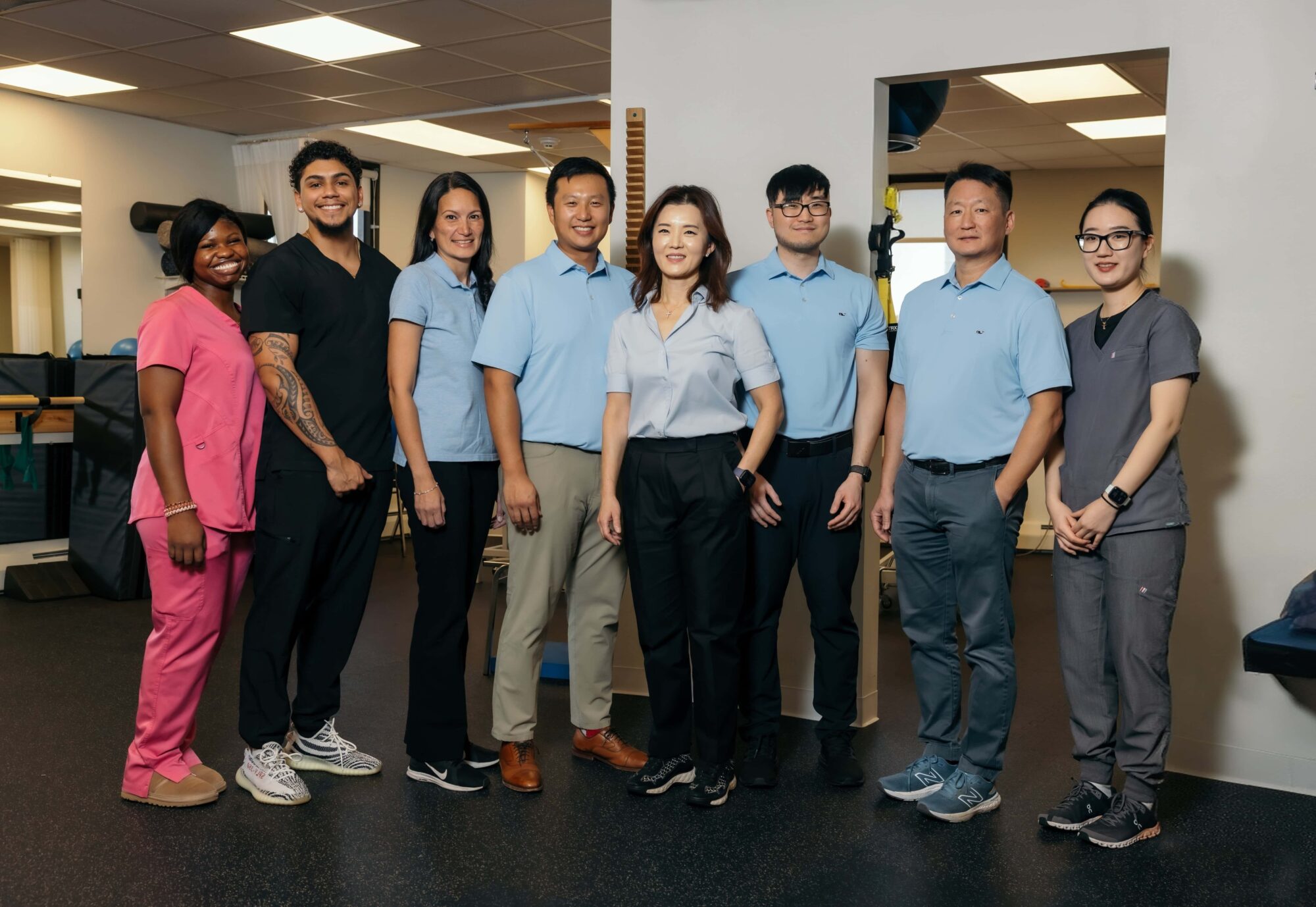
Meet our team
Doctorate-level therapists who build a plan around your specific injury and goals.
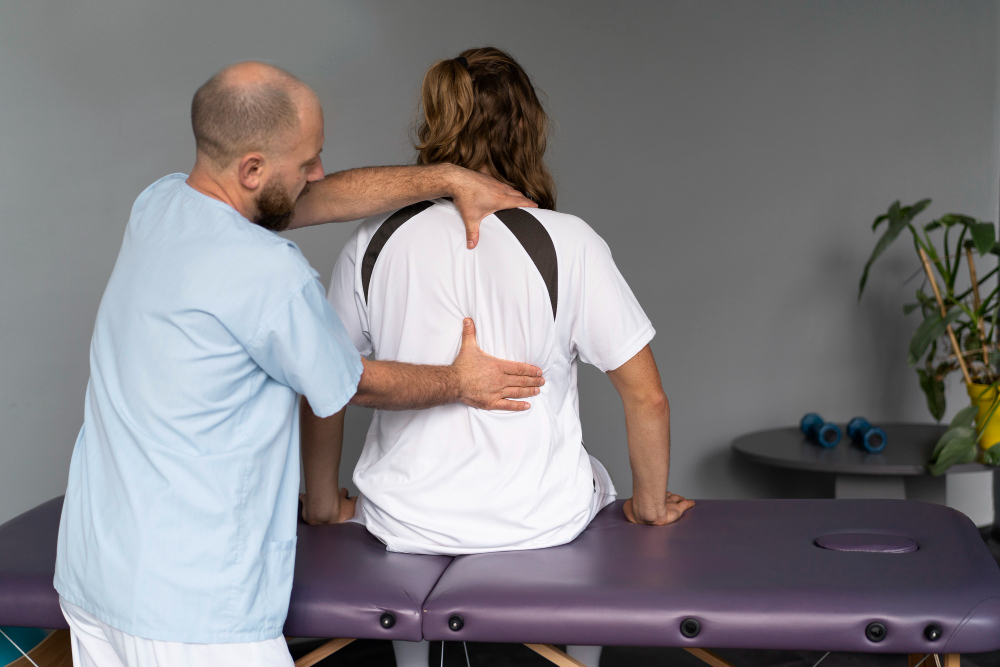
Conditions we treat
Back, knee, shoulder, hip and more. Find the condition that matches your pain.
Where does it hurt?
The PAIN We Treat
Our Patient's STORIES
Our patient’s continually rate us highly. Please read their reviews below and you’ll see that you’re in the safest and most professional hands when you visit us. Watch the video below to understand how we’ve helped some of our patients and why they rate us highly.
You Can Also Review Us On :
Frequently Asked Questions About Sports Injury Treatment
Return to sport is appropriate when you have full pain-free range of motion, symmetrical strength (within 10–15% of the uninjured side), successful sport-specific movement tests, and psychological readiness. Your PT uses objective criteria to determine readiness.
Yes — movement screening and corrective exercise can address asymmetries and movement limitations that impair performance. Many athletes work with PTs proactively to optimize movement quality and reduce injury risk.
A sprain is an injury to a ligament (connecting bone to bone). A strain is an injury to a muscle or tendon (connecting muscle to bone). Both cause pain, swelling, and functional limitation — and both respond to physical therapy.
The most effective prevention strategies include adequate strength and conditioning, sport-specific movement screening, progressive training load management, sufficient recovery between sessions, and addressing any movement asymmetries or previous injury sequelae.
Not always. Many sports injuries are diagnosed clinically and treated effectively without imaging. Your PT will screen for conditions that require imaging before proceeding with treatment and will communicate with your physician as needed.
Recovery timelines vary widely: mild muscle strains may resolve in 2–4 weeks, while ACL reconstructions require 9–12 months of rehabilitation. Your therapist will set realistic milestones and provide objective criteria for each phase of your sports injury treatment.