

Dry Needling Physical Therapy
How does Dry Needling aid Physical Therapy?
What is dry needling?
Dry needling is a pain-relieving technique using a tiny acupuncture needle. The needle is inserted at points of the body that are constantly tight, creating pain relief that many patients never thought possible. The needles can treat deep parts of the muscles- areas that are often difficult to reach with massage. They cause a “twitch” response – a brief contraction followed by sustained relaxation. This response can “deactivate” painful, knotted areas in the muscles.
Benefits of Dry Needling Therapy
Dry needling therapy, at times, is included in a complete treatment plan aimed at relieving pain and promoting mobility. It is a technique that aims at trigger points in the muscles and relaxes the muscles as well as increases the movement. Studies demonstrate that the method of dry needling can not only be a pain killer but also facilitate the communication between nerves and muscles, thus decreasing the time for recovery.
Moreover, physical therapists are trained in-depth about anatomy and modalities of treatment including some extra specialization for performing dry needling therapy. When you decide to get dry needling, always ask about your therapist’s qualifications and experience.
What can dry needling treat?
The dry needling technique can help relieve pain in most muscles, including jaw pain, shoulder pain, hamstring tension, and golfer’s elbow. It can improve blood flow, speed healing time, and help rid muscles of deep knots that other techniques cannot reach. Dry needling leads to many of the same results as massage, but at a deeper level. For a patient that has experienced results with massage, but found them to be short-lived, dry needling may be a good option. It can also complement massage therapy.
Who Shouldn’t Get Dry Needling Therapy?
Not every patient can benefit from dry needling therapy. The method is inappropriate for children under the age of 12 because of the possible pain factor involved. In case of a child considering it, you must always talk to a medical professional first and start with other non-invasive approaches. Furthermore, some patients need to discuss with their doctors before undergoing dry needling therapy like people who are:
- Pregnant
- Not able to comprehend the treatment properly
- Scared of needles (trypanophobia)
- Have weak immunity
- Had tracheostomy recently
- Are on anticoagulants
How does dry needling work?
Dry needling is not acupuncture – it is based strictly on Western medical principles and research. However, it is sometimes used within the context of an acupuncture practice. According to research by Dr. Jay Shah at the National Institutes of Health, inserting a needle into trigger points can lead to biochemical changes that reduce pain. The biochemical changes can help lead to the essential twitch response, which is the first step in breaking the cycle of pain.
Will the procedure hurt?
Because the needle is so small, it does not hurt the way a larger hollow needle does when puncturing the skin. Most patients describe the sensations as “releasing” or “pressure.” The needle remains in the skin for a very short amount of time – just enough to relax the muscle. There may be a small amount of pain, which some patients describe as a slight shock or a cramping sensation, but it is well worth the lasting relief that dry needling causes.
How will I feel after the session?
The muscles treated will likely feel sore, the way they do after challenging exercise. This is because the needle has caused them to contract numerous times in quick succession in order to relax them. Patients may feel fatigued, but not so much that it interferes with everyday activities. Some patients find it helpful to treat the area with heat or ice if there is soreness. After just a couple of sessions, most feel lasting relief from pain.
How often will I need to return to maintain my progress?
Usually, a dry needling treatment is repeated every five or six days until the pain cycle is broken. The first cycle will focus on just a few key muscles. Then, as the body becomes more used to the sensations, the treatment is fine-tuned to be as effective as possible. The technique is not a quick fix; instead it is a process that will help break the pain cycle. Once the pain cycle is broken, other treatment options are introduced to help prevent future problems.
Have Questions?
Let us know if you have any questions about your treatment, our practice and whatever else is on your mind. We are here to help and we look forward to serving you!
TMJ Disorder Treatment
TMJ Disorder Treatment with Physical Therapy
Relieve Jaw Pain & Restore Comfortable Function
Jaw pain, clicking, headaches, or difficulty chewing? TMJ disorders are very treatable with the right physical therapy approach — our Fort Lee PTs address the cervical and jaw mechanisms driving your symptoms.
4.9 · 120+ Google Reviews
Trusted across Fort Lee
No Referral Needed
Direct access — book today
1-on-1 With a Doctor of PT
Full sessions, never double-booked
Most Insurance Accepted
We verify your benefits free
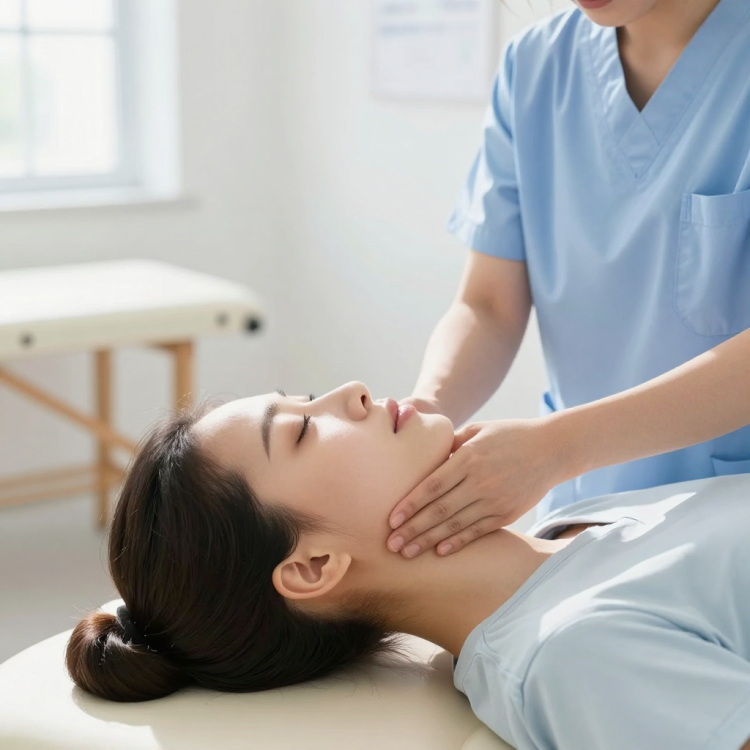
Expert TMJ Treatment in Bergen County, NJ
Temporomandibular joint (TMJ) disorders encompass a spectrum of conditions affecting the jaw joint, surrounding muscles, and related cervical spine structures. They are a surprisingly common cause of facial pain, jaw pain, and headache, and they are highly responsive to physical therapy that addresses both the local jaw dysfunction and the associated cervical spine contributors.
Jaw pain, clicking, and headaches from TMJ dysfunction are more treatable than most patients realize, and physical therapy is the first-line evidence-based approach.
Our TMJ Disorder Clinic in NJ addresses both the jaw joint and the cervical spine contributions to your symptoms.
What Is TMJ Treatment?
The TMJ is a complex sliding-hinge joint connecting the mandible (jaw) to the temporal bone of the skull.
TMJ disorders can involve articular disc displacement, joint degeneration, muscle spasm and trigger points in the jaw and neck muscles, or ligamentous laxity.
The intimate relationship between the cervical spine and the craniomandibular system means that neck dysfunction frequently contributes to TMJ symptoms — and vice versa.
Common Symptoms
- Jaw pain or soreness, particularly in the morning
- A clicking, popping, or grinding sound with jaw opening or closing
- Limited mouth opening or jaw locking
- Facial pain, particularly in the muscles around the jaw
- Headaches particularly in the temple or behind the eye
- Ear pain or fullness without ear infection
- Neck pain and jaw pain occurring together
Research supports PT — including manual therapy to the jaw and cervical spine, exercise, and postural correction — as the primary evidence-based treatment for TMJ disorders, with excellent outcomes for the majority of patients.
How We Treat TMJ Disorders
Treatment addresses both the local TMJ (joint mobilization, disc repositioning exercises, jaw muscle release) and the cervical spine (manual therapy, strengthening, postural correction), which contributes to TMJ function. We also provide guidance on jaw habits, bruxism, and dietary modification.

TMJ Joint Mobilization
Skilled hands-on techniques that restore normal jaw joint mechanics and disc position.
Jaw Muscle Release
Trigger point release and soft tissue mobilization of the masseter, temporalis, and pterygoid muscles - frequently the primary source of TMJ pain.
Cervical Spine Treatment
Manual therapy and exercise for the upper cervical spine — a critical and often overlooked contributor to TMJ disorder.
Habit & Postural Correction
Identifying and correcting oral habits, jaw clenching, forward head posture, and other factors perpetuating TMJ symptoms.
Our TMJ Disorder Clinic in NJ is one of the few physical therapy clinics in Bergen County with specific expertise in craniomandibular rehabilitation. Patients from Paramus, Teaneck, and Fort Lee benefit from our integrated approach, which treats both the jaw and the neck because they cannot be separated.
Relief for Your Jaw
At our TMJ Disorder Clinic in NJ, most TMJ disorders respond significantly within 6–10 weeks of physical therapy. We coordinate with your dentist or oral surgeon when splint therapy or other dental interventions are part of the treatment plan.
Serving Bergen County & Beyond: Fort Lee Physical Therapy’s TMJ specialists serve patients from Fort Lee, Englewood, Hackensack, and Paramus. Bergen County residents experiencing jaw and facial pain can access expert conservative care without traveling to Manhattan.
Fort Lee Physical Therapy resolves TMJ disorders that dental appliances and pain medication alone cannot. Our TMJ disorder treatment comprehensively addresses joint mechanics, muscle function, and cervical contributions. For more questions, please call (201) 585-7300.
Other Services Provided by Fort Lee PT
Physical therapy aims to reduce pain, improve movement, and restore function. It uses a combination of treatment methods to support healing and recovery. Physical therapy is often recommended for injuries or medical conditions that limit mobility and make daily activities more difficult.
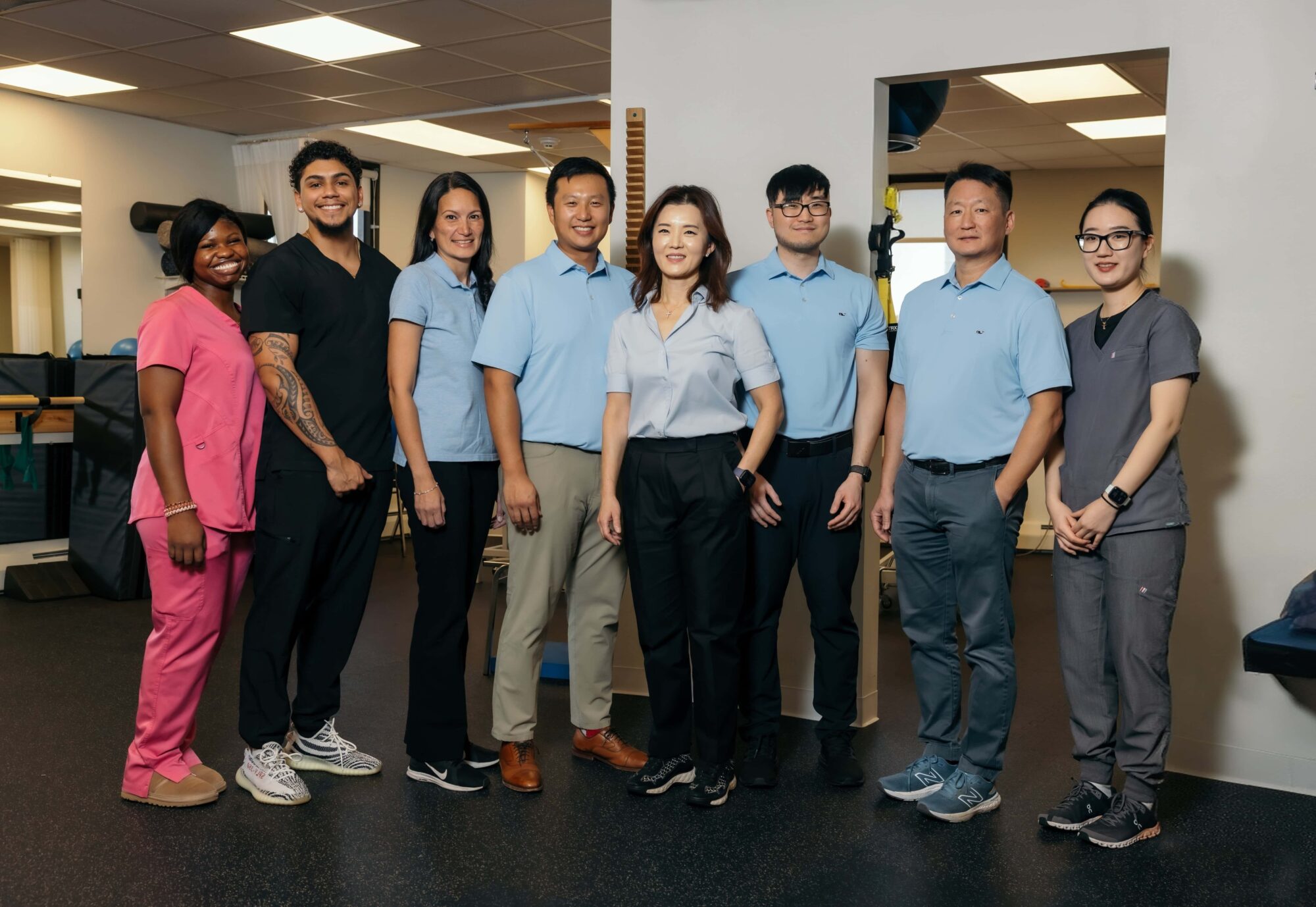
Meet our team
Doctorate-level therapists who build a plan around your specific injury and goals.
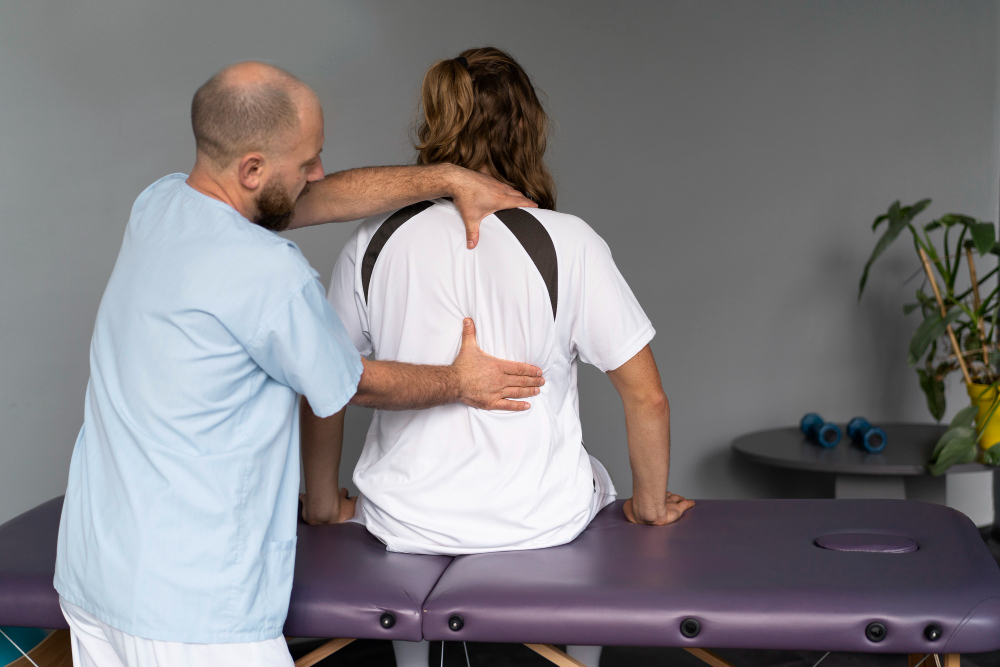
Conditions we treat
Back, knee, shoulder, hip and more. Find the condition that matches your pain.
Where does it hurt?
The PAIN We Treat
Our Patient's STORIES
Our patient’s continually rate us highly. Please read their reviews below and you’ll see that you’re in the safest and most professional hands when you visit us. Watch the video below to understand how we’ve helped some of our patients and why they rate us highly.
You Can Also Review Us On :
Frequently Asked Questions About TMJ Disorders Treatment
Yes — physical therapists with specific training in craniomandibular disorders are highly effective in treating TMJ dysfunction. PT addresses both the jaw joint and the cervical spine contributions to TMJ symptoms.
A painless click in the jaw without any functional limitation is common and often requires no treatment. Painful clicking, jaw locking, or clicks associated with pain or limited mouth opening warrant evaluation.
Common contributors include jaw clenching or teeth grinding (bruxism — often during sleep), forward head posture, cervical dysfunction, jaw trauma, and articular disc displacement. Many cases have multiple contributing factors.
Yes — psychological stress commonly manifests as jaw clenching and muscle tension that directly contributes to TMJ pain. Stress management strategies are an important component of comprehensive TMJ management.
Both have a role — they address different aspects of the condition. A night guard manages bruxism and reduces nocturnal jaw loading; PT addresses the joint mechanics, muscle function, and cervical contributions. The two approaches are complementary.
Most patients see significant improvement within 6–10 weeks of consistent physical therapy. Your therapist at our TMJ disorder clinic will set realistic goals and adjust your plan based on your progress. Chronic or complex cases may benefit from ongoing management alongside dental care.